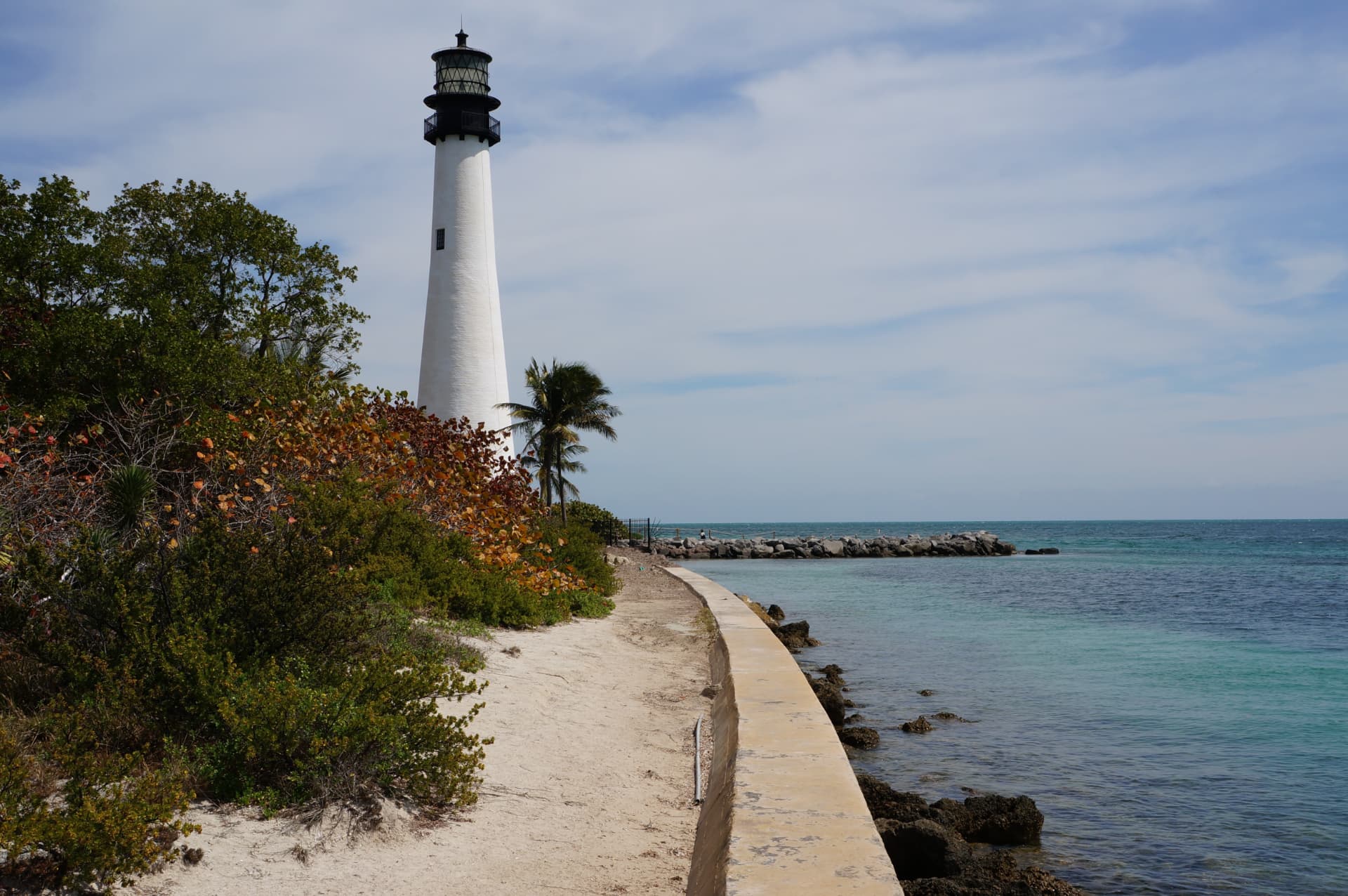
The Three Faces of Miami
The Three Faces of Miami — A Traveler’s Immersion in Coral Stone, Bayfront Pulse, and Vintage Shore
Step off the plane into air that announces itself immediately—damp earth, sun-warmed citrus, and a faint salt edge that never quite leaves your collar.
Most people speak of Miami as a single, feverish headline. But anyone who has unpacked a bag here with intention knows the place does not behave like one city at all. It layers itself in three distinct movements: a 1920s Mediterranean dream carved from ancient coral rock beneath a sheltering canopy; a high-rise waterfront where the Miami River meets Biscayne Bay in a rush of maritime commerce and bilingual conversation; and a barrier-island shoreline of Streamline Moderne curves, terrazzo floors, and pale Atlantic light.
To understand Miami, you do not rush between them in a single breathless weekend. You move through them deliberately, changing hotels along the way, treating each base as its own world and honoring the hours spent simply sitting.
Act I: Coral Gables & The Inland Canopy
Three nights under the banyans at The Biltmore
The journey begins not on the sand, but inland.
Here, George Merrick’s 1920s City Beautiful remains one of the great romantic experiments in American town planning. The streets do not bake; they rest under massive banyans and towering live oaks whose wide branches knit together overhead. There is no gloom beneath these trees—only sweeping breezes of coolness out of the midday sun, rustling through the leaves and softening the subtropical heat into something gentle and restorative.
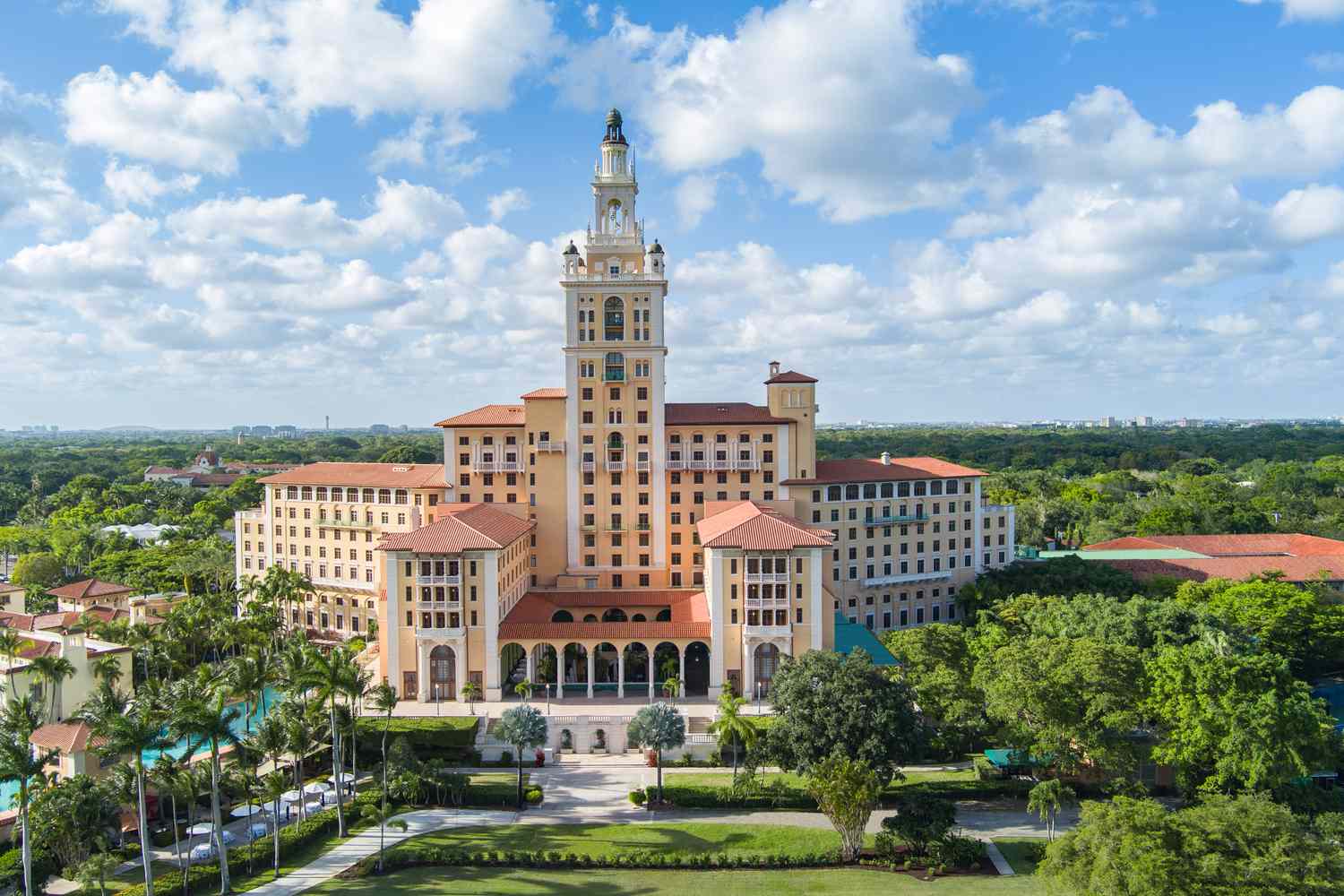
Rising above this green sea is The Biltmore Hotel, opened in 1926 and designed by Schultze & Weaver. Its 315-foot tower—modeled on the Giralda in Seville—stands sentinel over the golf course like a sun-drenched Andalusian palace.
The Atmosphere Ritual: Claim a deep leather chair in the vaulted lobby in the late morning, or carry a cold drink out to the stone colonnade overlooking the pool terrace. Johnny Weissmuller once gave swimming lessons in that vast expanse of water; during the war, the hotel healed soldiers as a convalescent hospital. Today, the acoustics are hushed, the hand-painted ceilings glow with soft terracotta and gold, and the world outside feels miles away.
Days in the Green
From this shaded inland haven, the days open outward at whatever pace you choose:
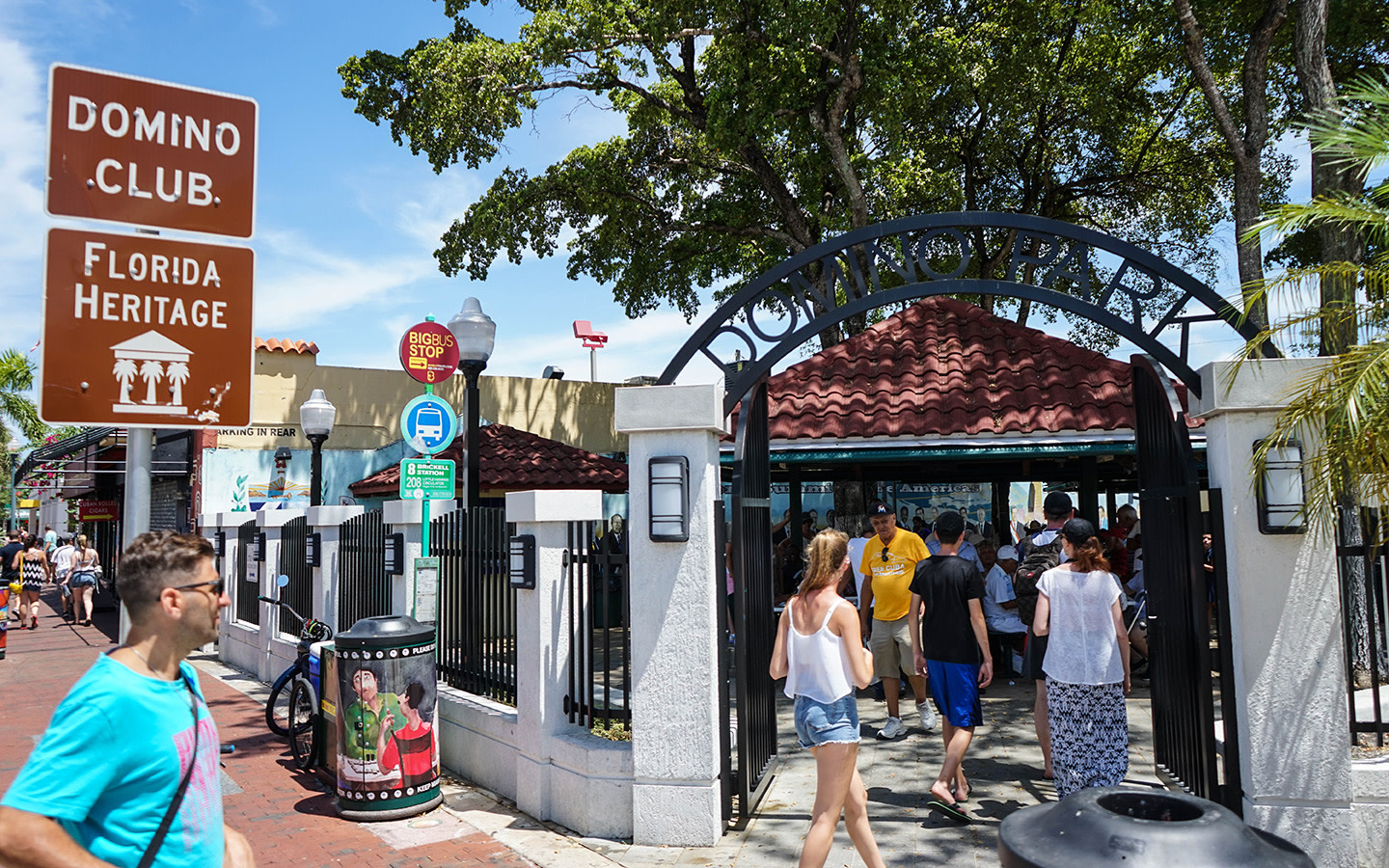
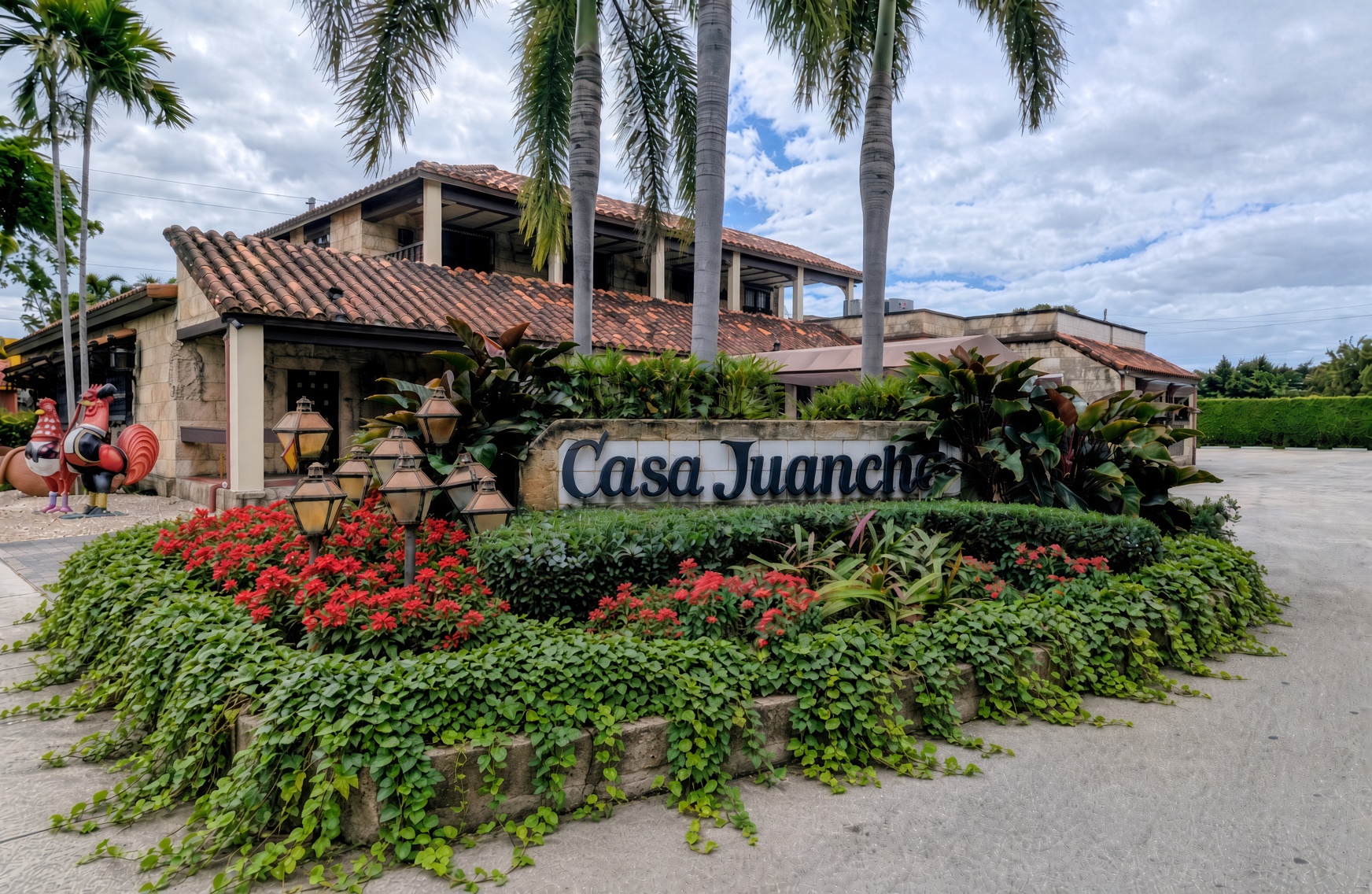
- Little Havana & Calle Ocho: A short ten-minute ride brings you into the heartbeat of the diaspora. Slip between 12th and 17th Avenues to Máximo Gómez Park (Domino Park), where veteran players snap white tiles against wooden tables with fierce, rhythmic precision. Order a thimble of sweet cafecito and a warm pastelito de guayaba from a walk-up ventanita, and let the Spanish chatter wash over you. Come evening, step into Casa Juancho on 8th Street: strolling guitarists, hanging jamóns, heavy timber beams, and a skillet of garlic shrimp paired with a crisp Albariño.
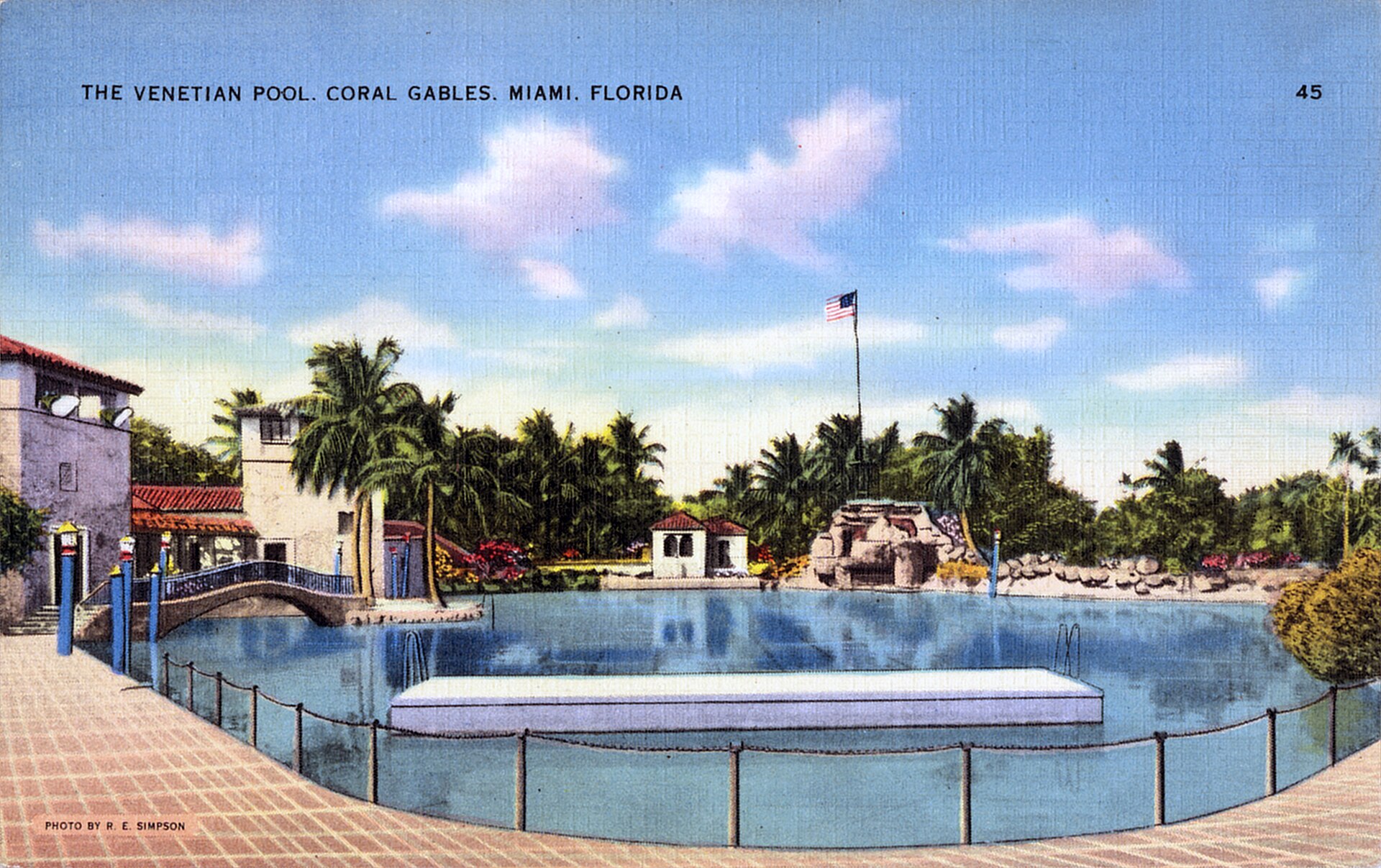
- The Venetian Pool: Just down the avenue from The Biltmore, this 1924 landmark was carved directly out of a coral-rock quarry. Fed daily by fresh subterranean springs, with arched stone bridges, loggias, and tumbling waterfalls, it remains one of the most enchanting swimming holes on the continent.
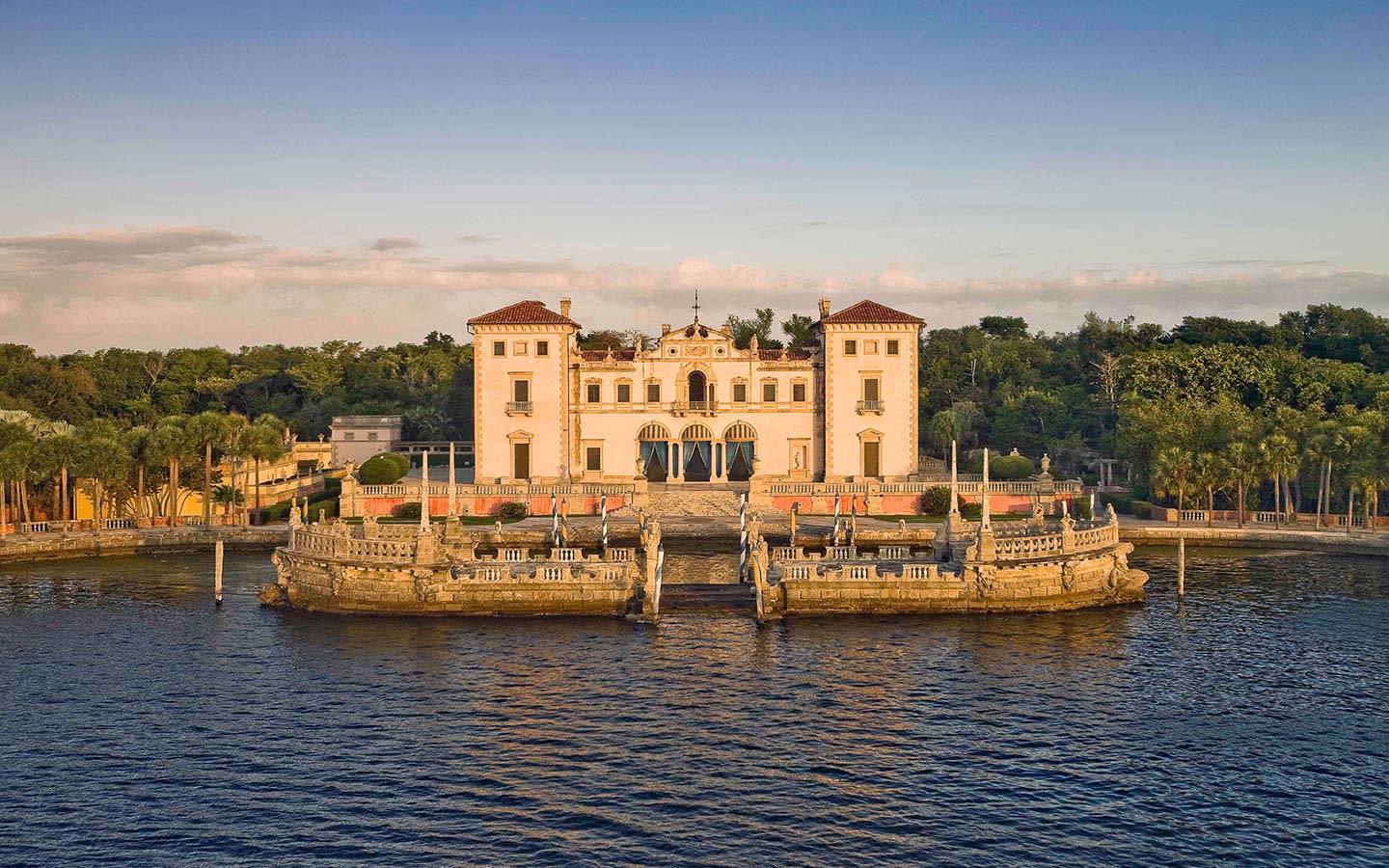
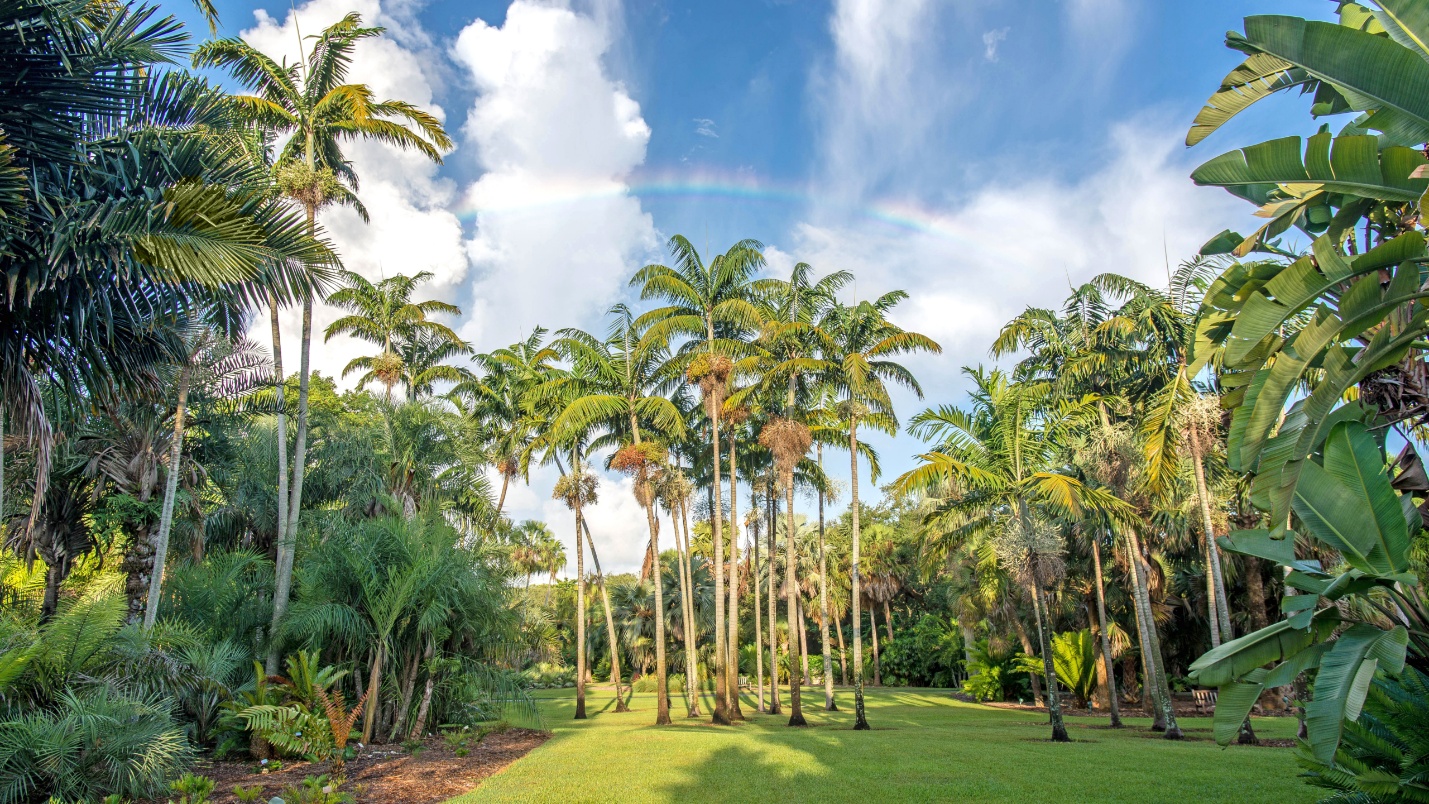
- Vizcaya & Fairchild: Spend an afternoon wandering James Deering’s Vizcaya Museum & Gardens, an Italian Renaissance villa perched on the bay whose weathered stone breakwater resembles a grand ceremonial barge. Further south along Old Cutler Road, Fairchild Tropical Botanic Garden spreads eighty-three acres of rare palms, sunken lily pools, and quiet rainforest paths that show what this coastline looked like before asphalt arrived.
Where the Mainland Eats
The dining around Coral Gables and the Coconut Grove edge belongs to locals who demand real flavor over theater:
- Garcia’s Seafood Grille: On the working Miami River, where wooden fishing boats still tie up at the dock. Sit outside on the weathered deck, watch the tugs glide past, and order the yellowtail snapper—blackened or fried whole—with a bowl of plantain chips.
- Bayshore Club (Dinner Key): Set on the historic seaplane slip where Pan Am Clippers once roared into the sky. It is open-air, breezy, and honest about its raw bar and ceviche.
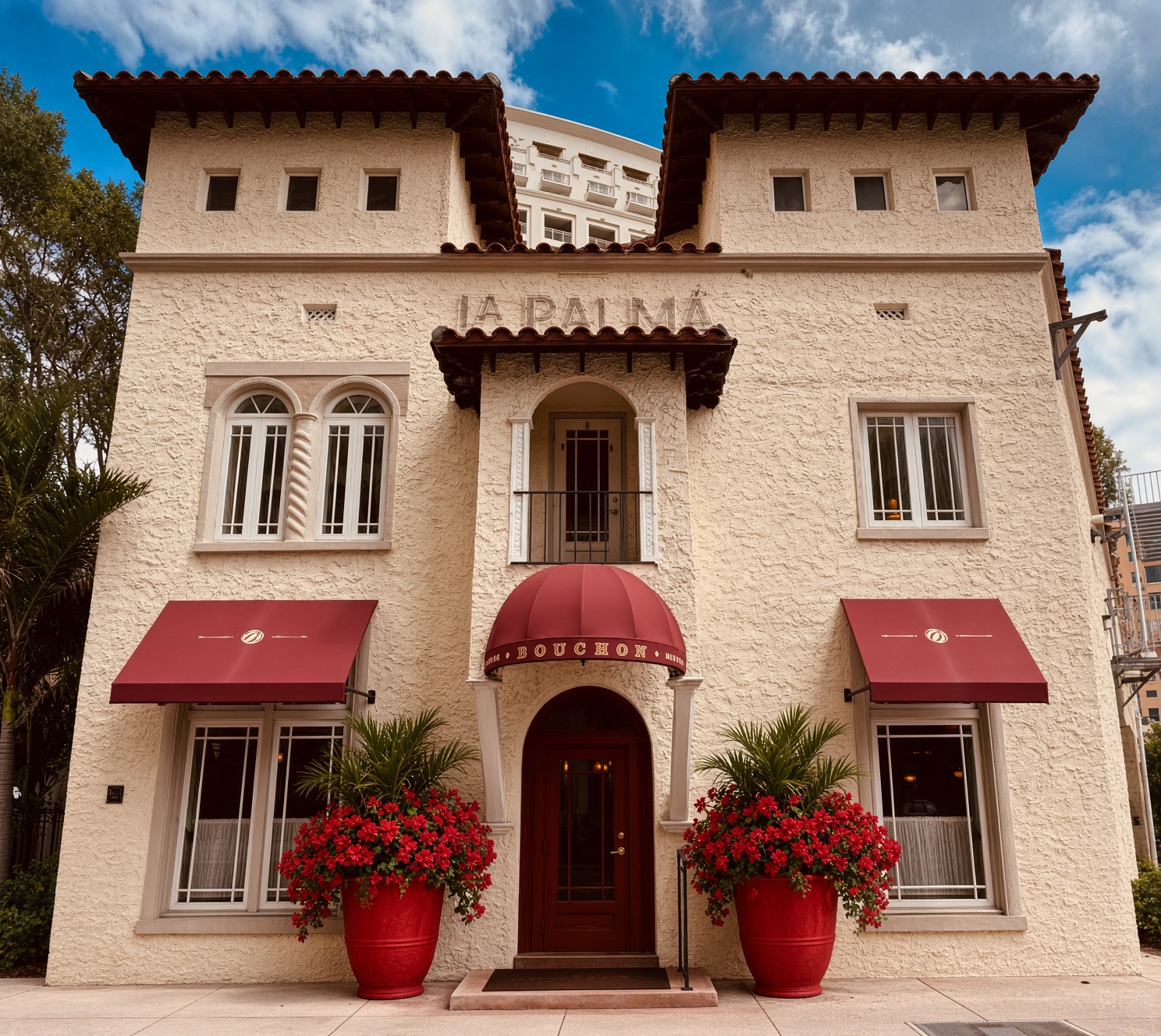
- Bouchon Bistro: Tucked inside the 1924 La Palma building in the Gables, where Thomas Keller’s kitchen turns out impeccable roast chicken and chilled oysters in a courtyard planted with Fairchild flora.
Act II: Downtown Waterfront & Bay Views
Two nights suspended between river and bay at the InterContinental
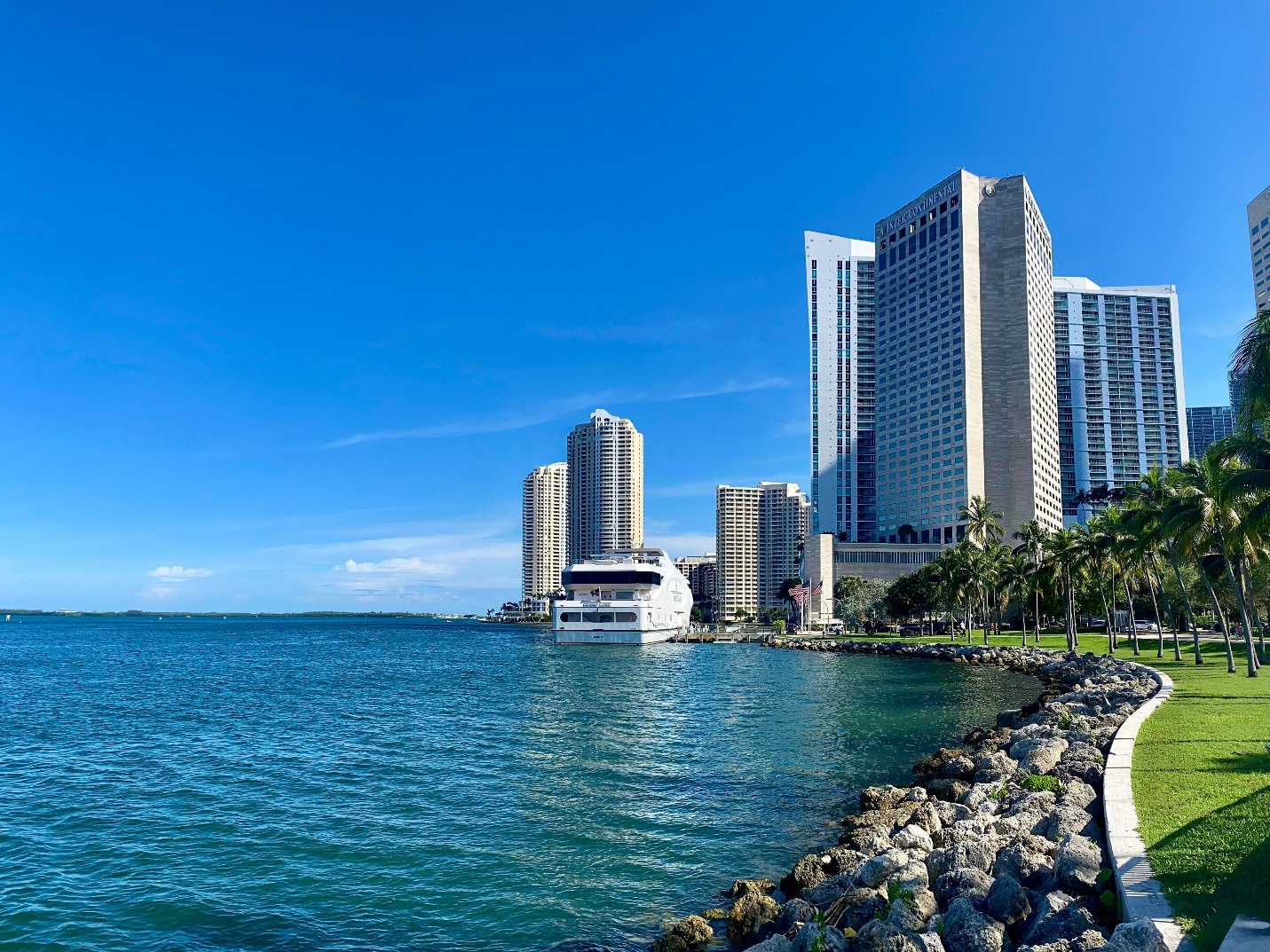
Pack your trunk and head east. The scenery shifts dramatically from quiet residential banyans to the soaring glass and water of Chopin Plaza, where the Miami River empties into the vast, open turquoise of Biscayne Bay.
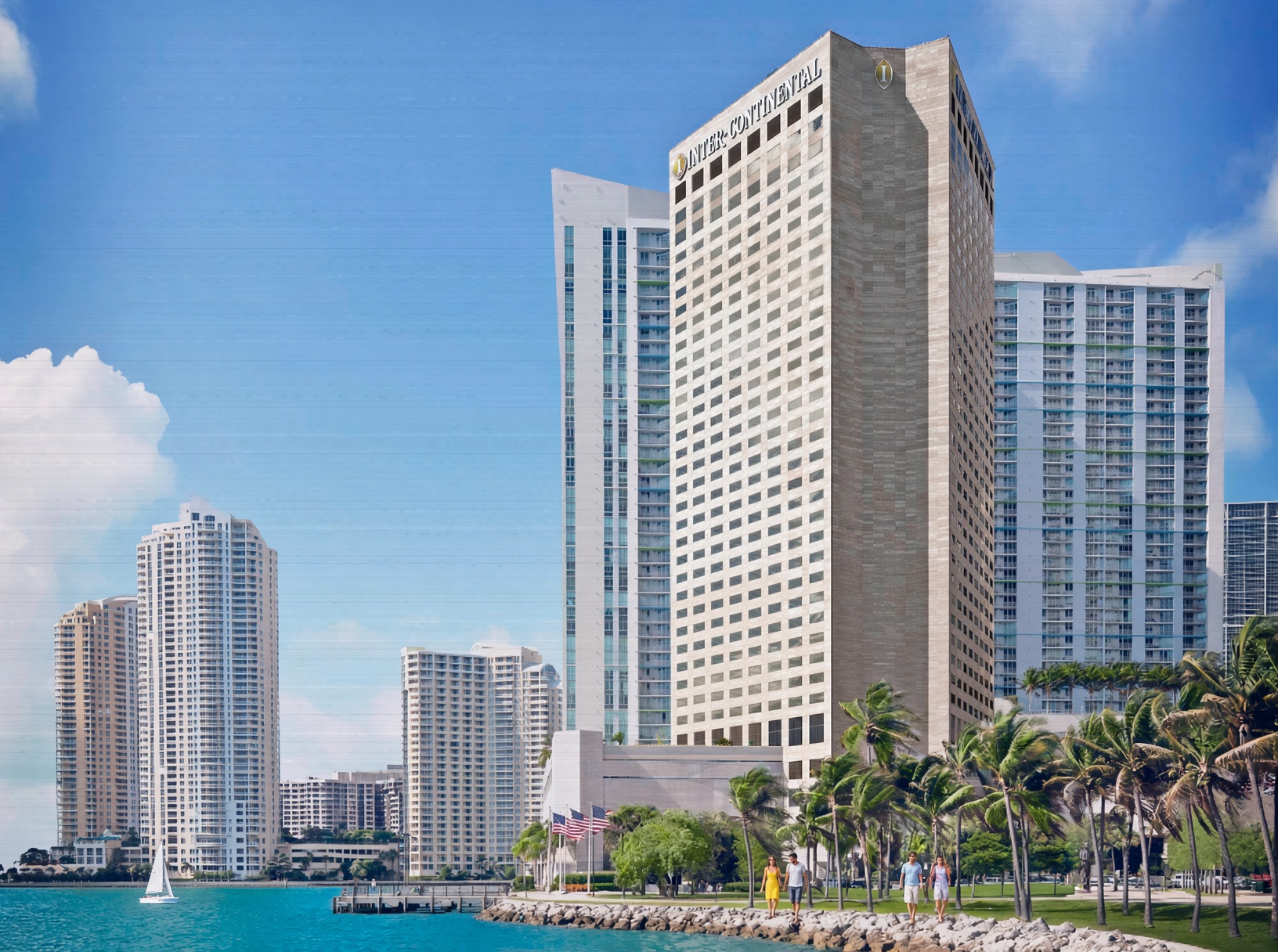
The InterContinental Miami does not pretend to be a sleepy hideaway. It is a grand concourse—a multi-story, light-flooded atrium looking directly out across cruise ships, cargo freighters, and barrier island causeways.
The Atmosphere Ritual: Settle into the lobby lounge or the terrace around 5:30 in the afternoon. The room hums with maritime captains, Latin American trade travelers, and city insiders carrying dossiers and cocktails. Order a proper Negroni or a pisco sour from Toro Toro, watch the late sunlight turn the glass towers into sheets of bronze, and listen to the effortless bilingual cadence of a city that looks south toward the Americas.
The Downtown Flow
Downtown Miami has retained its historic bones while growing an energetic cultural spine:
- Old Flagler Street Ghosts: Wander East Flagler Street beneath the neon traces of old retail empires. Step into the Shoreland Arcade (1925), built as the glamorous boom-era sales palace for Miami Shores, and admire the vaulted arches and stone reliefs that modern development never quite erased.
- Pérez Art Museum Miami (PAMM): Herzog & de Meuron suspended this museum on concrete stilts above the bay, wrapping it in hanging tropical gardens. The galleries celebrate 20th- and 21st-century art across the Caribbean and the Americas; lunch on the waterfront terrace is an essential downtown pleasure.
- Onto the Water: Step onto a narrated harbor launch or charter a morning center-console out of Bayside. From the water, the anatomy of Miami suddenly makes sense—the stark contrast between working container docks, the lush secluded enclaves of Star and Palm Islands, and the mangrove fringes of Fisher Island.
Dining by Metromover
One of Downtown’s quietest joys is the free elevated Metromover, which glides above the streets like an open-air monorail:
- Mornings: Stroll to Café Bastille on 1st Street for fresh croissants and savory crepes on the sidewalk, or step into La Boulangerie Boul’Mich inside the historic DuPont Building.
- Lunch: Slip into Ristorante Fratelli Milano, a warm, family-run Milanese room tucked into the 1920s Ingraham Building, for handmade tagliolini and a glass of Chianti.
- Evenings: Reserve a table at Tâm Tâm, a Michelin Bib Gourmand Vietnamese gem where bold, joyful drinking food—crisp wings, seasonal crudos, and herb-packed noodles—is served alongside an eccentric playlist and an infectious, unpretentious spirit.
Act III: South Beach Vintage Soul
One or two nights in the ocean breeze at The Shelborne or The Plymouth
Cross the Venetian Causeway as the afternoon cools. The mainland skyline recedes in your rearview mirror, replaced by the salty tang of the open Atlantic and the pastel palette of South Beach.
Forget the thumping velvet ropes. The real magic of Miami Beach lives in its architecture—the crisp geometry, rounded corners, and nautical portholes of Streamline Moderne and Art Deco that flourished between 1935 and 1945.
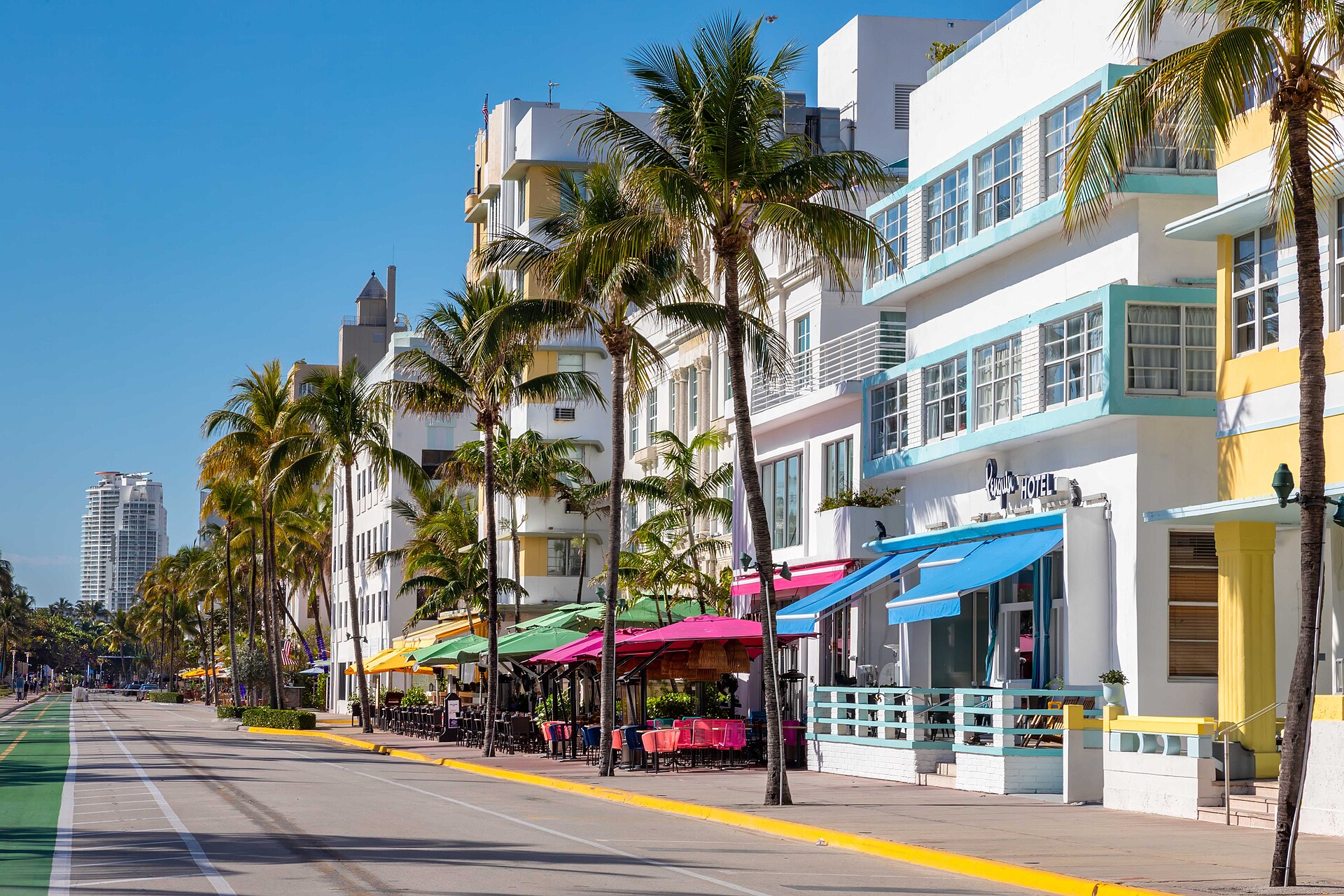
Choose a base that celebrates that craftsmanship:
- The Shelborne by Proper (Collins Avenue): Born in 1941 under architects Igor Polevitzky and Thomas Triplett Russell, and later graced with Morris Lapidus’s playful resort flourishes. Its restored terrazzo, warm terracotta tones, and breezy oceanfront pool deck offer classic beachside ease without gimmickry.
- The Plymouth (Collins Park): Anton Skislewicz’s 1940 masterpiece, crowned by its soaring corner pylon inspired by the 1939 New York World’s Fair. Inside, an intimate, bougainvillea-framed courtyard pool offers a sanctuary away from the main drag.
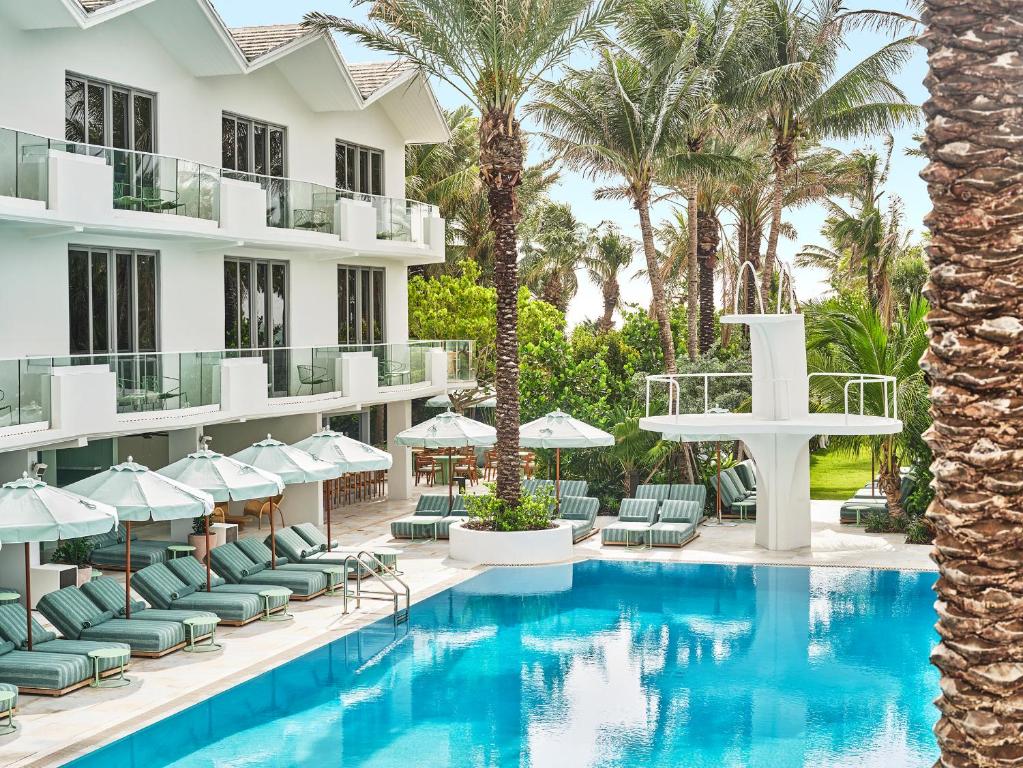
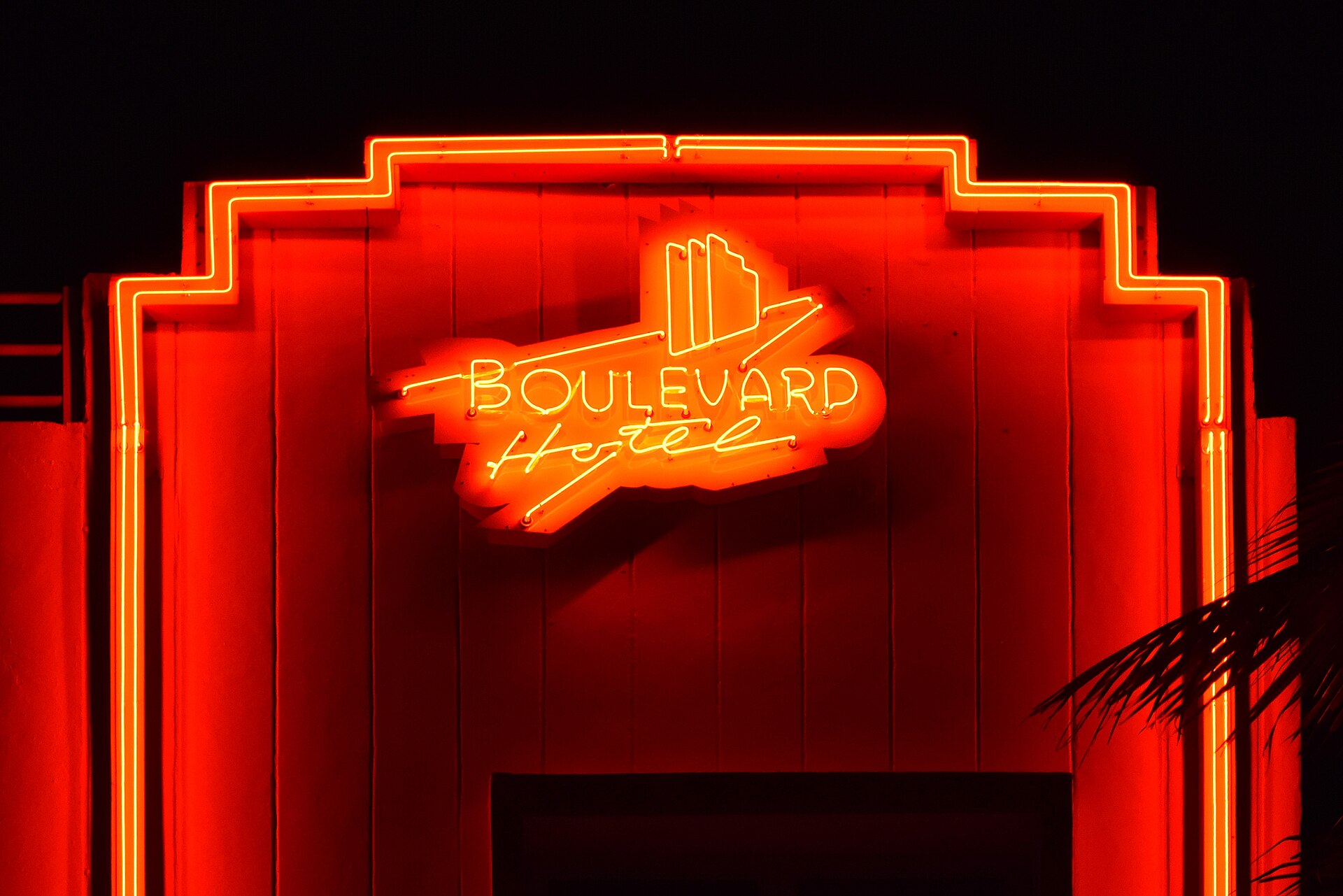
The Atmosphere Ritual: Claim a shaded lounger by the pool deck around four o’clock. The ocean breeze sweeps straight off the Atlantic, rustling the palms and rattling the ice in your glass. As the sky turns pale apricot, take an unhurried walk down Ocean Drive and Española Way, watching the neon tubes flicker awake against the fading twilight.
The Traveler’s Ledger
Practical scaffolding for an unhurried journey
- Arrival: Flying into Miami International (MIA) puts you fifteen minutes from The Biltmore. Alternatively, flying into Fort Lauderdale (FLL) allows you to rent a convertible and take State Road A1A south along the beaches—trading the interstate for ocean vistas and old Florida motel signs.
- The Car Question: You do not need a rental car parked idly at expensive hotel valets all week. Rely on rideshares for the short hops in Coral Gables and Downtown, ride the free Metromover for downtown meals, and save your walking shoes for South Beach and the garden paths.
- The Rhythm: Do not pack your calendar. The genius of this itinerary is that each hotel serves as a distinct living room: the cool, shaded quiet of Merrick’s inland sanctuary; the electric bayfront hum of Chopin Plaza; and the salt-air nostalgia of the pre-war beach.
Three hotels, three living rooms, one unhurried city.
Getting from the terminal to the first of those living rooms is covered in The Last Ten Miles; car hire, transfers, and tours are on our Resources page.